Facilities management is entering a defining decade. Artificial intelligence, once a distant conversation, is now reshaping how we manage buildings, deploy manpower and deliver value to clients, stakeholders and society. As President of the Singapore International Facility Management Association (SIFMA), I want to share how I see our profession navigating this shift, and where I believe it is heading.
I believe this shift is best understood not as a threat, but as a necessary evolution. Our industry is moving from managing assets to managing intelligence: buildings today generate vast amounts of operational data through sensors, building management systems and maintenance records, and AI allows us to convert that data into actionable intelligence at a scale that was previously impossible.
This does not diminish the role of the facilities management professional. If anything, it raises the bar. As AI takes on more of the work of retrieving information and generating recommendations, the value we deliver shifts from access to knowledge towards judgement, accountability and responsible decision-making. Trust, ethics and professional responsibility remain the constants that no technology can replace. AI can recommend a decision; only people can be accountable for it.
SIFMA has responded to this shift with the establishment of our AI Advisory Committee, formed in recognition that AI will fundamentally reshape our profession. We are working closely with industry, government and academia to help FM companies build AI literacy, improve productivity and prepare for the next wave of technological change.
Talent remains one of our most pressing priorities. Singapore's building stock will continue to grow even as our industry faces gaps in digital skills, sustainability skills and leadership. Our response cannot simply be to attract more people; it must be to enable every professional to become significantly more productive, and to help the next generation see facilities management not as a maintenance industry, but as one that shapes how people live, work and interact with the built environment. The future of FM is not about replacing people. It is about augmenting them.
On sustainability, I remain convinced that Net Zero is not a technology challenge but a transformation challenge. Achieving it will require Smart Technology to monitor and optimise, Smart People to make informed decisions, and Smart Processes to embed sustainability into everyday operations. Used responsibly, technology can accelerate our decarbonisation efforts considerably; used carelessly, it distracts from them. The choice, and the responsibility, is ours.
My advice to our members and partners is simple: don't panic, but don't stand still. Every disruptive technology before this one, from computers to the Internet to smartphones, was met with the same fears, and in every case, organisations and people that adapted found new opportunities on the other side. AI will be no different, and possibly more consequential. The future belongs to those who learn, adapt and evolve.
Technology can make buildings smarter. Only people can make the built environment better. I look forward to working alongside our members, partners and stakeholders as we navigate this next chapter together.
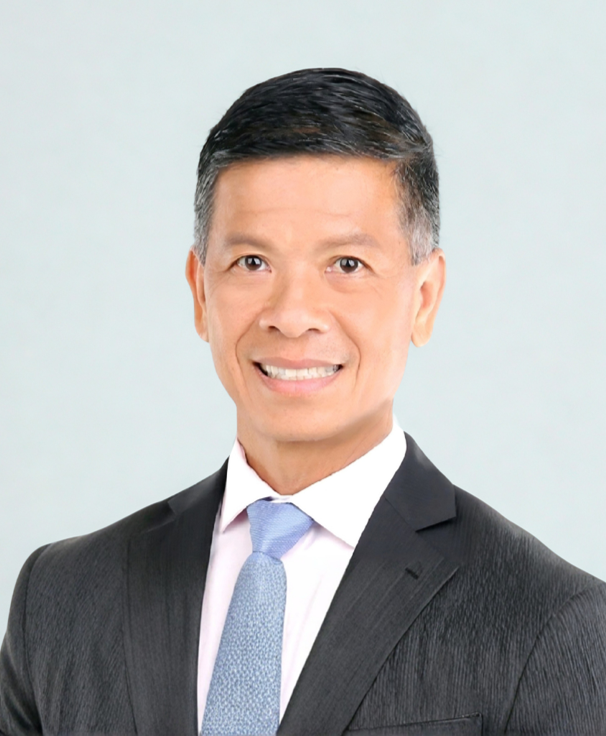
Frank Ngoh
President (2026 – 2028)